




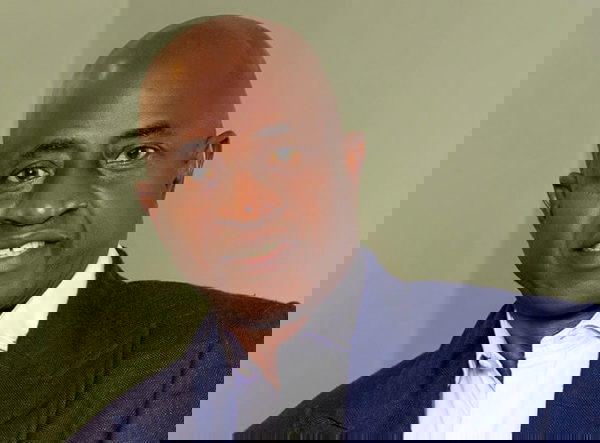
SEGUN ODEGBAMI: In sport, winning is NOT always about coming first!,
Do you like sports stories?
Welcome.
I joined IICC Shooting Stars FC of Ibadan in 1974. I was a student. I was amongst the first set of undergraduates to be admitted into the newly introduced HND program at The Polytechnic, Ibadan. I combined my grounding in Mechanical Engineering with playing at the highest level of football for my club and the country. It paid my fees and my bills.
It was extremely hard work, but I survived!
In December of 1976, during my National Youth Service Corp year, my club won both that year’s Nigerian National League as well as the Africa Cup-Winners Cup, a continental competition introduced a year before that by CAF for national FA Cup winners. I was a very major player in both victories. Of the 16 goals that we scored in regulation time to win the trophy, I scored 7. Moses Otolorin, my striking partner in a 4-2-1-3 formation scored 8. The rest of the 14-member squad that actually played in all the matches scored only one goal between them.
The first edition of the African cup in 1975 was won by Tonnerre Kalala FC of Cameroon. Its attack was led by Africa’s deadliest forward at the time, and Africa’s best player of 1975, Roger Milla.
My club won the second edition. We played the finals over two legs against the defending champions, Tonnerre Kalala FC, in December 1976 with an aggregate score line of 4-2. It was Nigeria’s first continental trophy.
At the start of 1977, IICC Shooting Stars FC was one of the strongest teams in African football, loaded to the hilt with exceptionally gifted players. 8 of them had been playing in the Nigerian national team, the Green Eagles, at various times between 1974 and 1976 – Zion Ogunfeyimi, Idowu Otubusen, Samuel Ojebode, Best Ogedegbe, Mudashiru Lawal, Adekunle Awesu, Phillip Boamah, and Segun Odegbami.
That year, as National league title holders and defending African champions, IICC FC had the unusual option to play in either of the two African club competitions – the Champions Club Cup or the Cup Winners Cup.
After a lot of mostly political considerations, the officials, in consultation with the Oyo State government, chose to defend the African Cup-winners Cup title.
That gave their Ibadan-city rivals, Water Corporation FC that had come third in the national league the made-in-heaven opportunity to participate in the African Club Championship, representing Nigeria.
That was the first and only time such has happened in Nigeria’s football history. Water Corporation FC played impressively, got to the quarter finals, and showcased their coach, Chief Festus Adegboye Onigbinde. As a result of the team’s performance, the coach was eventually hired to handle the National football team, the Green Eagles.
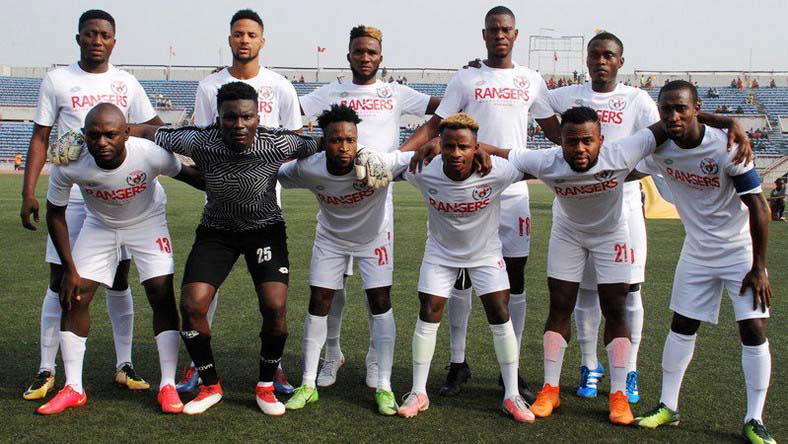
That’s how, for participating in the same continental competition, perennial national rivals, Rangers FC and Shooting Stars FC, had to play against each other in the semi-finals. Both matches were to take place two weeks apart in the then federal capital city of Lagos.
What ensued during the two matches were of historic significance. Easily, they can be classified as two of the biggest, most competitive and most hyped domestic matches in Nigeria’s football history.
It was a ‘war’ between the Igbo and the Yoruba tribes, an intense rivalry that had its roots in the socio-cultural and economic contest of superiority between the two tribes before and after the Civil War of 1967 to 1970. This rivalry was rekindled in football and in those two matches. Luxurious buses loaded with football fans flooded Lagos from the east and and the west of Nigeria. As they emptied their cargo of supporters into the bowel of the National Stadium, Lagos, the huge car parks in the sports complex transformed into venue for a cultural festival of sing-drum-and-dance by the Red and White cladded Rangers’ supporters and the Sky blue and White cladded fans of Shooting Stars!
The first match in Lagos was a pressure cooker affair, tension-packed for 48 hours and more. It threatened the peace of the city around Surulere. The federal government had to intervene to bring down the tension.
Following the first scoreless first match, the second-leg match was moved out of Lagos some 48 hours to the game to Kaduna, a neutral ground in the heart of Nigeria!
The supporters of both teams merely swelled in spread and numbers. The drum beats and the buses now came from everywhere descending on Kaduna.
Ahmadu Bello Stadium had never in its history experienced such throng of football spectators, before and after that encounter.
Without the benefit of numbered seats around the terraces, no one knew what the number of spectators was. The place was just jammed beyond its capacity, like canned beef!
For the second leg, we were flown to Kaduna in a military aircraft without regular seats. We were strapped to the sides of the aircraft like soldiers going to war.
The second match, like the first, was evenly fought. Neither side could score a goal in regulation time. It had to be settled through a penalty shootout!
Emmanuel Okala, the giant goalkeeper for Rangers, easily the biggest player on the African continent at the time, made the difference in the end. With his imposing height and fire in his eyes, he stared down at our kickers. It was almost like looking into the barrel of a gun.
Rangers won on penalty kicks.
We were very disappointed by that loss. We believed we had the better team, played the better football, but could not find the back of Rangers goal because of Okala.
Since the defeat of Rangers FC immediately after the Civil War in the finals of the 1971 FA Cup at the hands of Shooting Stars, we had not succeeded in winning another game against them for 5 years!
That match in 1977 was our best chance. We gave it our all. We left everything we had on the turf of Ahmadu Bello Stadium, Kaduna. There was nothing more for us to give.
The governor of Oyo State at the time, General David Jemibewon, a great sportsman who understood the psychology of sport better than most leaders that I knew in my career, demonstrated what was to become a fulfillment of the true Olympic spirit.
When our team returned to Ibadan, his government organised a reception for us at the man bowl of the Liberty Stadium, and before a full house of our fans, the Governor presented to the 22 players that had gone to Kaduna and failed to win, the keys to 22 brand new Volkswagen cars! The cars were glittering in the sun on the tartan tracks of that magnificent stadium.
It was both a soothing balm to the pain of our loss on the field, as well as a defining moment for us all as sportsmen outside the field. According to our boss, General David Jemibewon, ‘to WIN is NOT necessarily about coming FIRST in a race, but always about effort and performance, putting up one’s very best and leaving the rest!
The post SEGUN ODEGBAMI: In sport, winning is NOT always about coming first! appeared first on Vanguard News.
,
Do you like sports stories? Welcome. I joined IICC Shooting Stars FC of Ibadan in 1974. I was a student. I was amongst the first set of undergraduates to be admitted into the newly introduced HND program at The Polytechnic, Ibadan. I combined my grounding in Mechanical Engineering with playing at the highest level of […]
The post SEGUN ODEGBAMI: In sport, winning is NOT always about coming first! appeared first on Vanguard News.
, , Emmanuel Okogba, {authorlink},, , Vanguard News, May 9, 2026, 1:24 am