




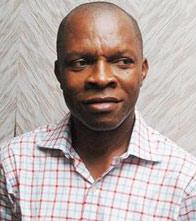
A forgotten name, by Patrick Omorodion,
An adage says if one doesn’t know where he or she is going, then that person definitely should know where he or she is coming from.
Over the years, administrators who have steered the ship of the football house either didn’t know or deliberately ignored mentioning the name of the first Nigerian to head the Football Association.
Despite a line in our former National Anthem that said the ‘Labour of our heroes past shall never be in vain’, these football administrators, especially the latter day ones, who were not even born when the Rivers State-born football administrator was either voted or appointed to run the game in the country, never thought it wise to recognized him, how much more immortalizing his name.
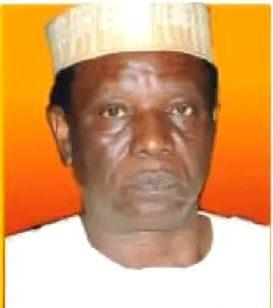
But one Nigerian, Kio Amachree, ironically the son of that Nigerian, Chief Godfrey Kio Jaja Amachree, has chosen to put the record straight by letting Nigerians know the truth about the foundation his father helped lay many years ago.
After reading him on Facebook, I thought I should share his piece which has not been refuted by the current board of the Nigeria Football Federation, NFF, as it is currently known, led by Ibrahim Musa Gusau.
Here is the piece by Kio Amachree titled: The First Nigerian Chairman: How Amachree Built Nigerian Football from the Ground Up.
There was a beginning to Nigerian football leadership. And that beginning had a name.
Chief Godfrey Kio Jaja Amachree was the first Nigerian Chairman of the Nigerian Football Association. Not second. Not one of many. The first.
At a time when Nigeria had just emerged from colonial rule, when institutions were still dominated by expatriates, my father took control of Nigerian football and placed it firmly in Nigerian hands.
Breaking Colonial Control: Before independence, football administration in Nigeria was heavily influenced—if not outright controlled—by colonial structures. Then came in- dependence in 1960. And with it, leadership had to change.
My father stepped in and became: The first Nigerian to lead the NFA. A symbol of African control over African institutions. A builder of a national football identity. This was not just sport. This was sovereignty through football.
Two-Time Chairman: Not Ceremony, but power. He did not serve once. He was trusted enough to serve twice as Chairman of the NFA. That tells you everything.
Because in those days: Positions were not given lightly. Results mattered. Reputation mattered. And his leadership delivered: Structure to Nigerian football governance. International credibility. Direct engagement with global football powers.
1969: Pelé, Santos, and a Nation at War. In 1969, during the Nigerian Civil War, my father helped orchestrate one of the most extraordinary moments in football history. He brought Pelé and Santos FC to Nigeria.
The Match Details: Venue: Lagos (Onikan Stadium), Teams: Santos FC vs Nigerian XI, attendance: Tens of thousands, global attention: Massive.
What Happened Next: Fighting paused in parts of the country, Nigerians gathered — regardless of side, football became a temporary bridge over war.
Think about that. A nation divided by bullets, stopped to watch football. That is leadership. That is vision, Investment, Expansion, and Global Vision.
My father understood early: If you build football properly, you build national pride.
Under his leadership: Nigeria hosted international club tours, local football gained organizational legitimacy, Nigerian players began entering global conversations, the NFA became a serious governing body.
This era laid the foundation for everything that followed: Nigeria’s rise in African football, Olympic glory, export of elite Nigerian players worldwide.
The Silence Around the Name. And yet today: The name Amachree is missing from the conversation.
How? The first Nigerian Chairman, a two-time leader of the NFA, the man who brought Pelé to a war zone, a builder of Nigerian football’s early structure. This is not a footnote. This is foundational history.
Final Word: You cannot talk about Nigerian football without talking about: Its origins. Its leadership. Its architects
And at the very top of that list stands: Amachree: The first Nigerian to take control. The man who gave Nigerian football direction. The leader who understood that foot- ball could unite a nation—even in war. If Nigeria is serious about its football future, it must first respect its football past. Kio’s beautiful piece ends here.
After reading the piece, I really felt sorry for Nigeria because I thought to myself that it wouldn’t have been an oversight but a deliberate attempt to obliterate his father’s name from the history of the NFA.
When Lagos was the capital city, the NFF headquarters was not named after anybody. However, when it had its first befitting headquarters, it was named after Sunday Dankaro, a former Chairman of the NFA. The first Nigerian to head the Football House, was overlooked.
Today the man’s son is letting Nigerians know that his father is deliberately being ignored or actually forgotten.
So of what use is that line in our former National Anthem that ‘the labour of our heroes past shall never be in vain’.
Or maybe with the change of that ‘Arise O’Compatriots’ National Anthem, it could be that the new dispensation doesn’t reckon with the long held mantra that ‘the labour of our heroes past shall never be in vain’.
The post A forgotten name, by Patrick Omorodion appeared first on Vanguard News.
,
An adage says if one doesn’t know where he or she is going, then that person definitely should know where he or she is coming from. Over the years, administrators who have steered the ship of the football house either didn’t know or deliberately ignored mentioning the name of the first Nigerian to head the […]
The post A forgotten name, by Patrick Omorodion appeared first on Vanguard News.
, , Emmanuel Okogba, {authorlink},, , Vanguard News, April 4, 2026, 11:41 pm