





M-East war: Hardship deepens with petrol selling at N1,300 per litre,
–Dangote adjusts gantry prices of petrol, diesel to N1,175,N1,620 per litre
–Promises steady supplylCrude oil price hits $110 per barrel
–Transporters raise fares by over 50%
By Udeme Akpan, Energy Editor, Obas Esiedesa, Ediri Ejoh, Mariam Eko & Adeola Badru
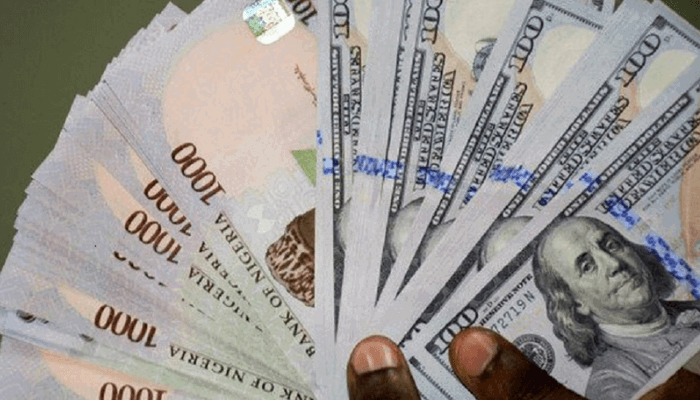
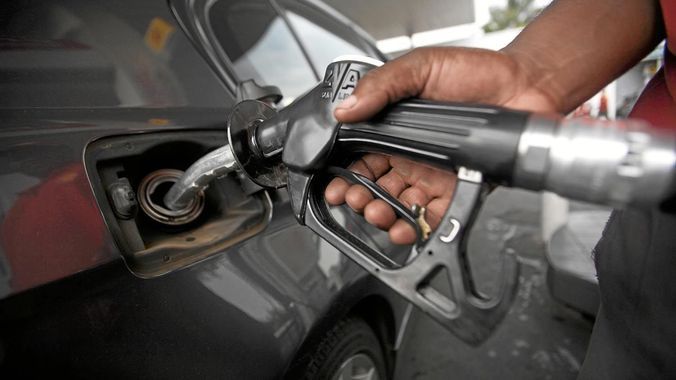
LAGOS — Nigerians have been exposed to more hardship as oil marketers yesterday increased the price of Premium Motor Spirit, PMS, also known as petrol to N1,300 per litre from N1,050 per litre.
This indicates an increase of 24 per cent, following the consistent rise in crude oil prices to $110 per barrel in the international market, amid the Middle East crisis.
Also, the pump price of Automotive Gas Oil, also known as diesel, increased to N1,380 per litre from N1, 100 per litre at MRS outlets, while the NNPC Limited outlets sold it at N1,680 per litre in Lagos and environs.
The price of petrol rose sharply to between N1,200 and N1,300 per litre in Ibadan and neighbouring communities in Oyo State.
Prior to the latest increase, the product was sold at between N1,020 and N1,080 per litre.
A member of the Independent Petroleum Marketers Association of Nigeria, IPMAN, who spoke on condition of anonymity, attributed the increase to the rising landing cost of the product.
According to the marketer, the cost of lifting fuel from the Lagos depot has climbed to N1,175 per litre.
“The pump price varies, depending on the destination. While the pump price in Ibadan hovers around N1,200 and N1,300 per litre, the same cannot be said of places like Ogbomoso and Oke-Ogun areas,’’ he said.
Similarly, in Abuja, petrol price rose dramatically at retail outlets from N880 per litre seven days ago to over N1,300, following the decision of Dangote Petroleum Refinery to increase the gantry price of petrol and diesel to N1,175 per litre from N995 per litre, and N1,620 per litre from N1,430 per litre, respectively.
In a notice to oil marketers, the refinery attributed the development to the prolonged instability in the global oil markets, resulting in the price of crude oil rising to $110 per barrel yesterday from $102 per barrel.
The price from the refinery has seen four different increases by filling stations in Abuja in the past one week.
On Monday last week when it sold at N880 per litre, the price rose to N960 and N1,080 by the past weekend, and jumped to N1,103 earlier yesterday.
The new price expectedly has led to increases in transportation costs, with fares rising by over 100 per cent on some routes.
Checks on some of the bus-stops in Area 8, Garki and Central Area, showed that fares on the routes which cost about N800 before the prices began rising a week ago have risen to N1,500. Fare from Area 8 to Nyanya which cost N500, doubled to N1,000.
However, in an interview with Vanguard, an energy expert said the increase in price was not unexpected due to almost daily rise in the price of crude oil in the international market.
He said: “The margins for refineries are very small, we’re talking about 1.3 or 1.5 per cent and so any small increment in crude price has major effect on product price. That is how it works and so any shift in crude prices will shift product prices.
“It doesn’t matter that there is stock unless Nigeria will subsidise crude for Dangote again. By this, I mean unless Nigeria will not sell to him again at the international price. Old stock doesn’t matter because the old stock will buy the new stock.”
Similarly, Partner, Kreston Pedabo, Mr. Olufemi Idowu, said in his reaction to the development: “The refinery capacity is 650,000 barrels per day but it gets less than half of that from the government local oil companies. Out of about 12 cargoes it needs, it is receiving about five cargoes. It means the refinery has to source for the remaining seven from somewhere else.
“The rise in oil prices should ordinarily boost our economy, but in reality, citizens will likely not feel the benefit because of our reliance on imported refined products. Households and businesses are rather burdened by increasing fuel costs, which is a sad reality,” he said.
Logistics, transportation, determine pump price — IPMAN
Checks by Vanguard indicated that major oil marketers maintain a relatively lower price than their independent counterparts.
However, in a phone chat with Vanguard, the Public Relations Officer for Independent Marketers Association of Nigeria, IPMAN, Mr. Chinedu Ukadike, confirmed the recent price increase of N1,175 per litre from Dangote refinery, adding that the refinery is currently not selling to marketers.
According to him, marketers buy from a tank farm owner, Pinnacle Oil and Gas, at the rate of N1,200.
He said: “The price at the Dangote Refinery increased to N1,175 per litre today (yesterday) from N995 per litre it was sold over the weekend. The refinery is not selling to our members today (yesterday), probably they are doing reconciliation to the new price.
“The price at the pump is determined by logistics, transportation and mark-up. These are determining factors marketers consider to retail fuel price. Given that our members purchase the product at the rate of N1,200 per litre from Pinnacle Oil, the price will vary at the pump, depending on the location, from N1,250 to N1,300 per litre in Lagos, while outside Lagos would cost N1,350 or more per litre,” he added
Fuel price to rise further to N2,000 per litre — PETROAN
On its part, the Petroleum Products Retail Outlets Owners Association of Nigeria, PETROAN, said yesterday petrol price in Nigeria might rise to as high as N2,000 per litre if the Middle East war persisted.
According to Billy Gillis-Harry, National President of PETROAN, the price of diesel price could rise to about N3,000 per litre if the current situation continues.
“PMS could rise close to N2,000 per litre, while AGO may approach N3,000 per litre if the situation persists,” Gillis-Harry said.
The PETROAN executive said with no clear end to the conflict, petroleum product prices in both international and domestic markets are expected to rise sharply in the coming days.
Gillis-Harry, therefore, called on Bayo Ojulari, Group Chief Executive Officer of NNPC Limited, to facilitate immediate commencement of production at Nigeria’s local refineries, particularly the Area 5 plant at Port Harcourt refinery and the Warri refinery.
He emphasised that revamping Nigeria’s refineries for immediate domestic production is critical.
Local refining, the PETROAN president said, will reduce exposure to international market volatility, especially as Nigeria has abundant crude oil resources under the custody of the NNPC.
Gillis-Harry noted that government-owned refineries are less vulnerable to global supply disruptions, compared to privately-owned refineries, which are dependent on imported crude.
He warned that continued fuel price increases “will worsen inflation, cause job losses, deepen economic hardship, increase transportation costs and raise prices of goods and services nationwide.
“PMS remains essential for daily mobility, while AGO is vital for manufacturing and industrial operations.’’
Transport fares rise by over 50%
Meanwhile, the hike in fuel price has affected transportation costs, leaving commuters stranded at various locations in Lagos and other parts of the nation.
In Ibadan, the sudden hike has already begun to affect intra-city and inter-city transport fares as commercial drivers now charge between N250 and N300 for trips from Sango to UI, compared to the previous fare of N200.
Similarly, the fare from Dugbe to Ojoo has increased to N900, up from the previous N600.
Dangote refinery absorbing shocks — Prof Iledare
In his reaction, Wumi Iledare, a Professor of Petroleum Economics, said the impact on Nigeria could have been more severe on Nigerians without the Dangote refinery.
He said: “The recent Iran tension pushed global crude prices up roughly 7–10% within a week, and in import-dependent markets like West Africa, such shocks typically translate into 5–8% increases in petrol prices because refined products quickly track crude movements.
“This is where local refining begins to show its value. With the Dangote Refinery processing domestic crude, part of the global escalation can be absorbed through logistics savings, freight elimination, and supply smoothing, potentially dampening about 20% of the price shock.
‘’In simple terms, without domestic refining, Nigerians would feel the full impact of global volatility; with it, some of that pressure can be cushioned.
“At the same time, rising crude prices will likely bring some shut-in wells globally back into production, as higher prices revive marginal fields. Unfortunately, Nigeria remains constrained. Even when price opportunities emerge, production limitations prevent the country from fully responding.
“Ironically, this could also be an opportune moment to expand crude sales in naira to local refineries, especially when Nigeria is not fully selling up to its OPEC quota in the international market.
“Domestic refining demand is growing, and aligning crude supply with local refining capacity could help stabilise both energy supply and the naira. “Another reminder is that domestic refining is not only about energy security, it is also about managing price volatility and capturing more value at home.”
FG should encourage establishment of more refineries — CPPE
On his part, the Executive Director, Centre for Promotion of Private Enterprises, CPPE, Dr Muda Yusuf, Muda Yusuf, called for more favourable policies to encourage more indigenous refiners to stabilise prices, amid the crisis rocking the Middle East.
He said: “There is need for policy priorities for sustaining refining investments. Given the strategic importance of domestic refining to Nigeria’s energy security, external sector stability and industrial development, it is essential that the policy environment remains supportive of investment in the sector.
“Government policy should continue to encourage domestic refining through a coordinated mix of trade policy, fiscal policy and monetary policy measures.
“Priority areas should include ensuring reliable crude supply arrangements, strengthening petroleum distribution infrastructure, introducing tariff protection, encouraging additional refining investments, and promoting export competitiveness for refined petroleum products.
“While domestic refining may not completely eliminate the effects of global oil price volatility, it significantly reduces the risks of supply disruptions, conserves foreign exchange, strengthens the balance of trade, and enhances national energy security.
“In this regard, domestic refining represents a strategic pillar for improving Nigeria’s economic resilience and long-term energy sustainability.”
Nigeria, other producers to earn more revenue — Expert
However, Matthew Anthony, Senior Market Analyst Africa, said: “Major oil producing nations like Nigeria may profit from this conflict. provided they are able to put a lid on inflation – a major consequence from rising oil prices-and use the windfall for critical budget needs, while preparing for potential market shocks.
“Outside of Nigeria, a wave of risk aversion engulfed global markets on Monday as ongoing conflict in the Middle East accelerated the flight to safety.
“Asian shares plunged; European markets opened deep in the red, while US equity futures signalled a negative open as investors scrambled to price the chaos from the Iran conflict.
“In the commodity space, oil prices jumped over 25% as major Middle East producers curbed output. Brent has gained roughly 30% this month, pushing 2026 gains to over 70% while WTI crude is up almost 80% year-to-date as of writing.
“The last time oil benchmarks crossed into triple digits was back in 2022 during the Russian-Ukraine war. And for most, it’s still a painful memory as geopolitical risk and COVID-19 supply disruptions caused inflation to skyrocket across the globe.”
However, the Federal Government 2026 budget was based on $64.85 per barrel, 1.84 million daily output and an exchange rate of N1,400 to the US dollar.
With crude oil hitting $110 per barrel, government has overshot its target by 70 per cent, while its citizens languish in hardship due to withdrawal of fuel subsidy.
Dangote refinery promises steady supply
Meanwhile, the Managing Director of Dangote Petroleum Refinery, David Bird, has reassured Nigerians that the refinery will continue to meet the ountry’s fuel needs, despite ongoing disruptions in the global oil and gas market.
He noted that while fuel import dependent countries are already experiencing panic-buying and rationing, Nigeria will not face such challenges again, saying the refinery is committed to ensuring petrol availability across the country.
Speaking during a media chat, Bird said the refinery remains steadfast in supplying uninterrupted fuel to the Nigerian market, even as geo-political tensions in the Middle-East drive sharp increases in crude oil prices, freight rates and insurance costs.
“Just a week ago, oil was trading in the mid $60 range, and it has now climbed to nearly $120 per barrel,” he said, adding that the shock has affected every segment of the world’s energy supply chain.
Bird explained that, like all players in the global refining industry, Dangote Refinery is exposed to fluctuations in crude prices, freight charges, and insurance premiums.
However, he stressed that Nigeria now enjoys a critical advantage: supply security made possible by domestic refining capacity.
“What would be worse than $120 oil is no oil,” he stated, pointing out that some countries are already implementing rationing because they relied completely on imports.
He added that several nations with significant refining capacity had begun restricting fuel exports to safeguard local supply, amid ongoing global supply shock.
Bird emphasised that as long as the refinery continued to receive Nigerian crude through the Federal Government and the Nigerian National Petroleum Company Limited, NNPCL, it will sustain its supply to the domestic market.
“With government support and steady access to domestic crude, Dangote Refinery will continue to meet all of Nigeria’s refined fuel requirements,” he assured.
‘’The facility can produce between 50 million and 55 million litres of petrol daily, with the ability to increase output through blending if needed,’’ he said.
‘Nigeria’s daily petrol consumption is estimated at 35 million litres, Bird noted, underscoring that the refinery has more than enough capacity to meet national demand.
He further stated that the refinery is prioritising supply to the Nigerian market to guarantee what he described as “fuel abundance.”
Bird affirmed: “We will ensure that Nigeria enjoys fuel abundance, not fuel scarcity.’’
“Pricing is determined largely by global commodity markets,” he explained, adding that decisions about fuel price interventions rested with the government.
US warns of threat to facilities, schools in Nigeria
THE State Department warned yesterday of a threat to US facilities and schools in Nigeria, urging Americans to take precautions.
“The US embassy in Abuja informs US citizens of a possible terrorist threat against US facilities and US affiliated schools in Nigeria.
“Increasing awareness of your surroundings, avoiding predictable routines, and reviewing general security precautions with your family can help reduce your risk,” it said in a notice.
The embassy did not spell out the source of the threat.
President Donald Trump on Christmas Day ordered US bombings of Nigeria, saying he was targeting jihadists.
The attack came after Trump complained that Christians were facing persecution in Africa’s most populous nation, an assessment that is contested in a country that has seen wide violence against both Christians and Muslims.
The warning in Nigeria also comes amid a global security warning by the United States after Washington and Israel attacked Iran, which has responded with missile and drone attacks against its US-aligned neighbours.
The post M-East war: Hardship deepens with petrol selling at N1,300 per litre appeared first on Vanguard News.
,
v
The post M-East war: Hardship deepens with petrol selling at N1,300 per litre appeared first on Vanguard News.
, , olufemiajasa, {authorlink},, , Vanguard News, March 10, 2026, 2:10 am