







Real-Time Impasse: Kukah Center, Yiaga Africa, others send message to NASS Conference Committee on ‘embedded loopholes’,
•Say: Adopt House of Reps version of amendment with proposed modification
By Gabriel Ewepu
After the Senate, on Tuesday, settled for conditional transmission of results of the 2027 polls in their amendment of the Electoral Act 2022, some Civil Society Organizations, CSOs, say the decision remains a halfway solution to the challenges plaguing the electoral process.
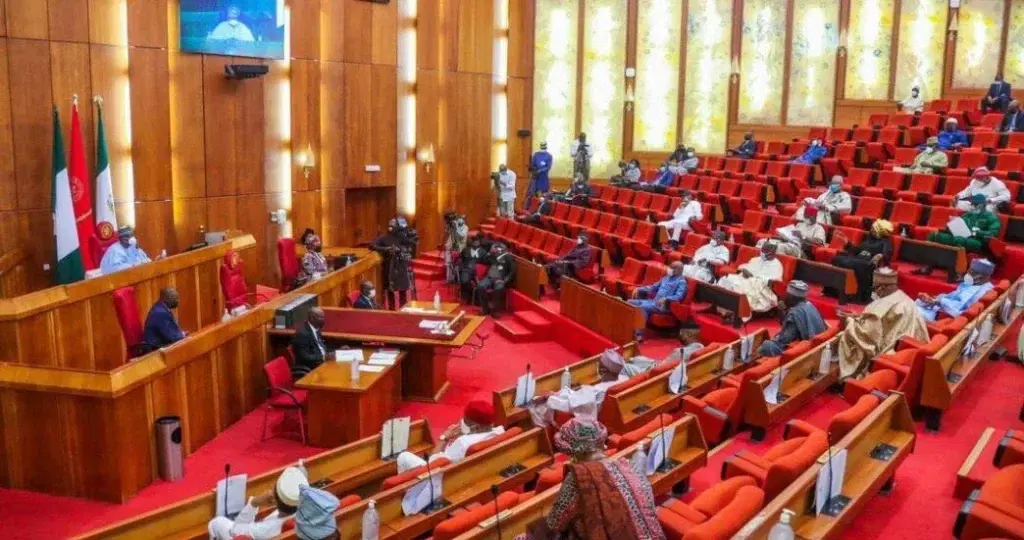
The Senate had during their emergency session made provision for real-time transmission of results with a backup of manual transmission where real-time fails.
The upper chamber had initially jettisoned electronic transmission of results before making a U-turn.
Meanwhile, the House of Representatives version of the amendment bill expressly provides for real-time transmission, thus paving the way for harmonization for which a Conference Committee of 24 has now been set up by the leadership of the Senate and the House to do the job.
“Electronic transmission with embedded loopholes undermines electoral integrity”, some CSOs said in a joint statement to Sunday Vanguard.
The bodies include Centre for Media and Society (CEMESO); The Kukah Center; International Press Centre (IPC); Elect Her; Nigerian Women Trust Fund; TAF Africa; and Yiaga Africa.
In a direct message, they said the Conference Committee of the National Assembly should adopt the provision on mandatory electronic transmission as passed by the House of Representatives with proposed modification.
The proposed modification: “The designated election official shall electronically transmit all election results in real time, including the number of accredited voters, directly from the polling units and collation centers to a public portal and the transmitted result shall be used to verify any other result before it is collated”.
They argued: “The condition in the clause (Senate amendment) signals electoral setback and it weakens the safeguards in the 2022 Electoral Act. The position of the House of Representatives on electoral transmission should be adopted”.
The full text: “On February 10th, the Senate at its emergency plenary session rescinded its earlier decision on electronic transmission and adopted a provision to permit electronic transmission of polling units’ results under Clause 60(3) in the Electoral Bill.
“The revised clause now mandates electronic transmission of results from polling units ‘as long as it does not fail,’ while designating Form EC8A as the primary source of election results.
“Additionally, the Senate has expanded its Conference Committee membership from six to twelve members to align with the House of Representatives.
“The undersigned civil society organization, advancing electoral integrity, welcomes the Senate’s decision to rescind its earlier rejection of mandatory electronic transmission of election results from polling units.
“However, we express serious concerns about the following insertions in Clause 60(3); The ‘Failure’ Clause Creates Dangerous Ambiguity: The conditional language ‘provided if it fails and it becomes impossible to transmit’ introduces troubling discretion in the results management process.
“The bill does not define what constitutes failure, how such failure is to be documented, or what verification mechanisms must apply.
“In the absence of clear safeguards, this clause risks creating a loophole that could undermine the very purpose of electronic transmission.”
They went on, “Form EC8A as ‘Primary Source’: A Question of Hierarchy: Designating Form EC8A as the primary source of results may confirm that polling unit results are legally important.
“However, it raises concerns about the legality and enforceability of electronically transmitted results. If the electronic copy is not treated equally, its value as a transparency safeguard could be weakened.
Safeguard
“Electronic transmission is not a symbolic reform. It is a structural safeguard designed to reduce manipulation between polling unit declaration and collation. Its strength lies in creating an immediate, verifiable audit trail. Making it optional or conditionally applied weakens its deterrent effect.”
Calling on the Conference Committee of the National Assembly to “adopt the provision on mandatory electronic transmission as passed by the House of Representatives with proposed modification”, the CSOs said: “The designated election official shall electronically transmit all election results in real time, including the number of accredited voters, directly from the polling units and collation centers to a public portal and the transmitted result shall be used to verify any other result before it is collated.
“Adopt the position of the House of Representatives which approves downloadable missing and unissued voters’ cards to prevent potential voter disenfranchisement. Regarding electoral timelines, we strongly recommend retaining current provisions in the 2022 Electoral Act and the House of Reps Electoral bill: 360 days for notice of elections, 180 days for submission of candidate lists, and 150 days for publication of nominations by INEC.
“Ensure meaningful civil society and technical expert participation in the conference committee deliberations.
“Nigerian citizens have demonstrated through consistent advocacy that they demand and deserve transparent, credible elections.
The Senate’s reversal shows that sustained civic pressure produces results. However, the work is not complete.
“We call on all Nigerians, civil society organizations, media, technology experts, political parties, and citizens to remain vigilant and engaged as this legislation moves through the conference committee. The details matter. The credibility of future elections depends on getting Clause 60(3) right.”
Senate’s decision fails to resolve core issues of 2023 general elections – ActionAid
In another reaction, the Country Director, ActionAid Nigeria, AAN, Dr Andrew Mamedu, pointed out that Senate’s decision on electronic transmission failed to resolve the core issue of 2023 general elections.
Mamedu said: “The Senate’s decision shows movement, but it does not fully resolve the core issue that emerged from the 2023 elections which we are trying to prevent for 2027
“Let us be clear about what happened in 2023. INEC regulations provided that election results would: Be captured at the polling unit using BVAS; be transmitted to the IReV portal; and be transmitted to the INEC electronic collation system.
“So there were three distinct processes built into the INEC regulations. Capture by BVAS, upload to IReV for public viewing, transmission into the INEC collation architecture.
“However, when disputes went to court, the legal arguments focused primarily on transmission to IReV. The Supreme Court held that IReV was not the legally binding collation reference point because the Electoral Act did not explicitly mandate electronic transmission as the authoritative result.
“This is where the real issue lies. INEC’s regulation actually preferred the electronically transmitted collation result over the physical copy where discrepancies occur.
“But because the Electoral Act itself did not clearly elevate electronic transmission as mandatory and authoritative, the legal foundation was weakened.
“So the problem in 2023 was not simply technology failure. It was legal ambiguity about which result takes precedence.
“That is why civil society has consistently said that electronic transmission and electronic collation must be clearly mandated in the Electoral Act itself. Not permitted. Not implied. Mandated.
“The proposed Clause 60(3) now permits electronic transmission from the polling unit after Form EC8A is signed, and provides that where electronic transmission fails, the physical form becomes the primary source.
“While that recognizes technology, it still leaves open critical questions about precedence and reconciliation in cases of discrepancy.
“If we do not settle this clearly in law, we risk returning to the same courtroom arguments in 2027.
“So in summary, this step from the Senate does not yet fully meet our demands because it does not eliminate the legal grey areas that undermined public confidence in 2023”.
‘Full chain of electronic result management best decision’
Speaking on the best decision the Senate would have made, Mamedu said: “The best decision would have been to clearly legislate the full chain of electronic result management.
“That means: Mandatory capture of results at polling units using BVAS; mandatory transmission of those results electronically; and mandatory use of electronically transmitted results as the primary collation reference across Ward, Local Government, State, and National levels.
“The law should clearly state which result prevails where discrepancies arise between electronically transmitted results and physical forms.
“In 2023, INEC’s regulatory framework already anticipated that electronically transmitted collation results would be preferred where inconsistencies occur.
“But because the Electoral Act did not explicitly provide for this hierarchy, the courts relied strictly on what was written in the statute.
“We must not repeat that mistake. Technology has already been tested. BVAS works offline and uploads when network becomes available.
“In off-cycle elections, upload rates reached 89 per cent in Bayelsa and up to 94 percent in other states.
“If those figures were achieved when transmission was not fully mandatory, compliance will improve further when the law removes ambiguity and makes it binding.
“This reform is not about semantics like ‘real-time.’ It is about eliminating the space where manipulation can occur between polling unit and final declaration.
“The law must remove uncertainty about capture, transmission, collation, and precedence.”
‘Transparency demanded when discrepancies occur’
The AAN boss said there are other issues beyond election results transmission the National Assembly should critically look at and make the necessary amendments as 2027 general elections draw closer.
He said, “Yes. Beyond transmission, clarity on results collation hierarchy is critical.
“The law must clearly state what happens where discrepancies occur between electronically transmitted results and physical forms.
“It must eliminate any room for manipulation between the polling unit and final declaration.
“There must also be stronger accountability provisions for tampering, interference, or deliberate obstruction of electronic transmission. Sanctions should be clearly defined and enforceable.
“Another key issue is transparency at all collation levels. Results should be traceable from polling unit to final declaration.
“The public must be able to track the movement and aggregation of votes at Ward, Local Government, State, and National levels.
“That is how we eliminate what many citizens describe as ‘magic’ between the polling unit and the final announcement.
“We must also ensure that timelines for reform are respected.
“There is concern that delay tactics could push amendments too close to constitutional deadlines, making it impossible to implement meaningful reform before 2027. That would be deeply problematic.”
The ActionAid leader said the National Assembly needed to avoid electoral controversy rooted in legal loopholes
His words: “Our message to the National Assembly is straightforward: Nigeria cannot afford another cycle of electoral controversy rooted in legal loopholes.
“Voter turnout has already declined to about 26 to 27 per cent in recent elections. That is a warning sign. When citizens believe their votes do not count or that results can be altered between polling units and final declaration, they disengage from democracy.
“The National Assembly must rise above partisan considerations and legislate in a way that restores public trust. This is not about any political party. It is about the credibility of Nigeria’s democratic system.
“Make electronic transmission and collation mandatory. Remove ambiguity. Clearly define result precedence. Provide enforceable sanctions. Ensure transparency at every level of collation.
“If these reforms fail, the greatest casualty will not be any political actor. It will be public confidence in democracy itself.”
He added: “Civil society is watching closely. Nigerians are watching closely. The 2027 elections must not repeat the uncertainties of 2023. This is the moment to strengthen the system decisively.”
Rejecting real-time transmission unacceptable – Global Rights
The Executive Director, Global Rights, Abiodun Bayeiwu, for his part, commended the Senate on retaining electronic transmission of election results, but declared that the rejection of real-time transmission unacceptable, saying it weakens the intended reform.
Bayeiwu said: “The Senate’s decision to retain electronic transmission is a welcome step and reflects the impact of our sustained engagement.
“However, the removal of the ‘real-time’ requirement weakens the clarity and strength of the reform and has opened room for manipulation and abuse.
“The core of our demand has always been certainty, transparency, and protection against manipulation.
“When timelines are not clearly defined, discretion increases and discretion in electoral processes can create room for uncertainty and manipulation.
“So while this is progress, it is not a complete victory for electoral transparency. Nigerians expect safeguards that are clear, enforceable, and resistant to political interference in our electoral process.”
On what Global Rights expected from the Senate that would have been the best decision, she (Bayeiwu) said, “The strongest and most confidence building decision would have been to retain mandatory real-time electronic transmission directly from polling units to INEC’s Result Viewing Portal immediately after announcement and signing of results.
“In addition, if manual transmission is allowed as a backup, the law should clearly define: What constitutes ‘network failure’; who verifies and authorizes the switch, its documentation and audit requirements and public disclosure mechanisms? Ambiguity fuels post-election disputes while clarity prevents controversy”.
Proviso on electronic transmission weakens impact – KDI
The Executive Director, Kimpact Development Initiative, KDI, Bukola Idowu, also speaking on the issue, asserted that the proviso attached to Senate’s decision on electronic transmission of election results weakens the impact.
“While the Senate’s decision to retain electronic transmission of results is a positive signal in principle, the proviso attached to it significantly weakens its impact”, Idowu said.
“The core demand of Civil Society Organizations (CSOs) and many Nigerians was straightforward: To give electronic transmission of results firm legal backing by moving the relevant provision, particularly Section 38 of INEC’s Guidelines, into the Electoral Act itself.
“This became necessary after the 2023 general elections, where, despite INEC’s assurances of real-time transmission, the process failed in practice.
“The situation was compounded by judicial pronouncements that INEC’s Guidelines do not carry the force of law. As a result, the courts held that failure to comply with those guidelines could not invalidate the election.
“That experience is precisely why there has been sustained advocacy to entrench electronic transmission clearly and unambiguously in the Electoral Act, so it becomes a legal obligation, not merely an administrative promise”.
He expressed concern over the lacuna in Senate’s decision on electronic transmission of election results, saying: “Unfortunately, by removing ‘real-time’ and introducing qualifications that make transmission contingent on communication availability, the Senate has left room for discretion.
“This risks returning us to the same situation we witnessed in 2023, where technical or communication challenges can be cited as justification for non-compliance.
“Therefore, while the amendment acknowledges electronic transmission in theory, it does not fully meet the objective of ensuring certainty, enforceability, and public confidence.
“Nigerians were seeking a mandatory, legally binding framework, not one that leaves room for ambiguity or selective implementation.”
We expected transmission to be real-time – IPC
In his reaction, the Executive Director, International Press Centre, IPC, Mr Lanre Arogundade, said despite Senate’s decision on electronic transmission of election results, real-time would have been the best.
Arogundade said: “My take is that the position of the Senate only partly meets the demands of CSOs.
“ While it is welcome that the Senate has agreed to electronic transmission of results from polling units and collation centres, it would have been more ideal to make it real-time, in the sense that such results would have been appended to by party agents”
Other amendment
The IPC boss said the National Assembly should also consider other amendments of the Electoral Act.
“There is the amendment that proposes that election results can only be reviewed only if an INEC official initiates the process, which we disagree with because we think political parties and their candidates should be able to demand for review wherever or whenever they suspect foul play”, he stated
He called on the National Assembly to place public interest above personal interest: “They should simply act in the public interest and refrain from anything that would further erode citizens’ trust in the electoral processes, institutions, and elections.”
QUOTE: The law must clearly state what happens where discrepancies occur between electronically transmitted results and physical forms. It must eliminate any room for manipulation between the polling unit and final declaration
The post Real-Time Impasse: Kukah Center, Yiaga Africa, others send message to NASS Conference Committee on ‘embedded loopholes’ appeared first on Vanguard News.
,
After the Senate, on Tuesday, settled for conditional transmission of results of the 2027 polls in their amendment of the Electoral Act 2022, some Civil Society Organizations, CSOs, say the decision remains a halfway solution to the challenges plaguing the electoral process.
The post Real-Time Impasse: Kukah Center, Yiaga Africa, others send message to NASS Conference Committee on ‘embedded loopholes’ appeared first on Vanguard News.
, , Idowu Bankole, {authorlink},, , Vanguard News, February 15, 2026, 12:36 am