





Showdown In Hospitals: Panic as patients caught in crossfire,
•Doctors, govt face-off, healthcare workers’ strike ground medical institutions tomorrow
•NARD President fumes: FG shunned ultimatum
•If anyone dies, blame President, Minister — NMA Chairman
•Demands being addressed – Salako, Minister of State for Health
By Chioma Obinna
For months, Nigeria’s teaching hospitals and other tertiary health institutions have been
enveloped in tension.
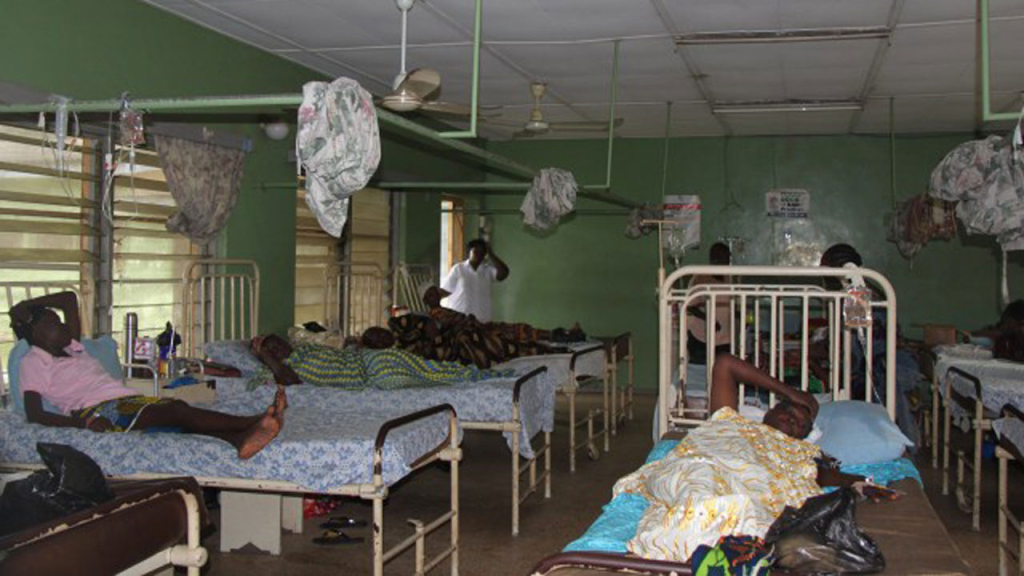
Wards that should hum with life and healing have instead echoed uncertainty as doctors and patients alike brace for a standoff that could paralyse the system.
While members of the Joint Health Sector Union, JOHESU, are still not back from their industrial action, more silence is expected to descend on these facilities.
This is not a silence of healing, but the ominous quiet of empty wards and abandoned duty rooms, the sound of a system on the brink.
Come midnight on Monday, January 12, 2026, the nation may witness a total, indefinite strike by the National Association of Resident Doctors, NARD, a move that experts warn could ground tertiary healthcare across Nigeria.
Already, anxious patients and overburdened consultants are scrambling to keep care afloat, while families watch helplessly as the heartbeat of the hospitals falters.
NARD is blaming the Federal Government’s failure to implement critical welfare and professional demands agreed in a November 2025 Memorandum of Understanding, MoU, for forcing the resumption of the strike.
The Federal Government, however, insists that many of the demands are structural, policy-driven, and already under review.
Unfortunately, caught in the middle are millions of patients, some of whom are frantically adjusting treatment plans while others face the stark possibility of abandoned care. At Lagos hospitals—from LASUTH to LUTH, FMC Ebute Metta, Federal Neuro-Psychiatric Hospital Yaba, and the National Orthopedic Hospital Igbobi—patients are being called in early for reviews, rushed through last-minute consultations, or discharged prematurely. Relatives pace corridors anxiously, uncertain if their loved ones will receive critical treatment once the strike begins.
This looming standoff sets the stage for a tense showdown between NARD and the Federal Government, with doctors warning of severe consequences for patients and the health system if the strike proceeds.
Lagos State NMA Chairman, Dr. Saheed Babajide, warned, “If anybody dies, the blame lies with the Minister of Health and the President.”
Meanwhile, Minister of State for Health and Social Welfare, Dr. Iziaq Salako, says government is addressing NARD demands through collective bargaining, a stark contrast that underscores the high-stakes battle unfolding in Nigeria’s hospitals.
Patient panic spreads across hospitals
Findings by Sunday Vanguard revealed a growing panic among both in-patients and out-patients.
Many residents are rushing to complete scheduled treatments, while doctors are calling patients to reschedule consultations or conduct early reviews.
For instance, an orthopedic patient being treated for a bone injury at the National Orthopedic Hospital, Igbobi, Lagos, was invited for a review ahead of schedule to ensure continuity of care.
At Lagos State University Teaching Hospital, LASUTH, Lagos University Teaching Hospital, LUTH, Federal Medical Centre Ebute Metta, Federal Neuro-Psychiatric Hospital Yaba, and the National Orthopedic Hospital Igbobi, similar scenes of hurried discharges, rushed consultations, and anxious families were reported.
The pattern repeats across tertiary health institutions nationwide, from the 36 states to the Federal Capital Territory, FCT, Abuja, leaving patients scrambling for alternatives while fearing a prolonged service disruption.
Relatives of patients voiced deep anxiety. “We have been waiting for surgery for weeks, and now we hear doctors may not be available,” said Mrs. Patience Adebayo, whose mother is admitted at LUTH.
“We don’t know what to do. Every minute counts, and seeing her waiting in pain is terrifying.”
Another family member at LASUTH lamented, “We have been juggling jobs and hospital visits, and now we’re being told that care may stop. It’s frightening for all of us.”
Background: A Strained Relationship
NARD first went on strike in November 2025, a total and comprehensive strike lasting 29 days, demanding attention to 19 critical welfare and professional issues affecting resident doctors across the country.
During this period, Sunday Vanguard can authoritatively report that the Federal Government, under the Federal Ministry of Health and Social Welfare, signed a Memorandum of Understanding (MoU) with NARD in an attempt to end the industrial action.
The MoU outlined commitments on salary arrears, promotion arrears, specialist allowances, house officers’ pay, locum engagement regulations, and timely issuance of membership and certification documents, among others.
While some progress was made, many of the agreements remained unimplemented, prompting NARD to issue a communiqué following an Extraordinary National Executive Council (E-NEC) meeting on January 2, 2026.
The communiqué expressed grave concern over delays, partial implementation, and redeployment of five disengaged doctors in Lokoja, noting that the government had failed to honour the MoU fully.
Consequently, the NEC resolved to resume a “total, comprehensive, and indefinite strike” (tomorrow) from January 12, 2026, alongside coordinated local, regional, and national peaceful protests.
NARD demands
The demands of NARD remain clear and uncompromising: Immediate reinstatement of the five disengaged doctors in Lokoja, prompt transmission and payment of compiled salary and promotion arrears, full implementation of the Professional Allowance Table with accrued arrears included in the 2026 National Budget, official clarification on skipping and entry-level placement, payment of specialist allowances to eligible members, immediate settlement of all House Officers’ salary arrears, reversal of re-categorisation of membership certificates by the MDCN, activation of task force committees to regulate locum engagement and work hours, timely resumption and conclusion of the Collective Bargaining Agreement, reconciliation and payment of outstanding arrears for CONMESS and accoutrement allowances, urgent intervention to repair and replace obsolete equipment and infrastructure, resumption of committee sittings on Special Pension Benefits, and accelerated progress on all previously agreed outstanding demands.
NARD resolved that these issues must be addressed fully; partial compliance, they insist, is unacceptable.
Enough Is Enough – Dr. Mohammad Usman Suleiman, NARD National President
In an exclusive interview with Sunday Vanguard, Suleiman said the union had been patient, but patience was running out.
“Since this communiqué was released, there has been no meaningful response. We are still exactly where we were—our demands remain largely unmet. Our members have been patient, but patience is wearing thin”, he said. “The 16 key issues from our MoU remain unresolved. If the government does not respond, we will resume strike and engage in peaceful protests within hospital premises. We are ready to defend our rights”.
The NARD leader painted a vivid picture of the personal toll: “There are doctors who have spent 20 months without salary, nine months without salary.
“Some members have been unjustly terminated. We are asking Nigerians to join us in calling on the government to restore some semblance of humanity.
“We love our profession, but we cannot continue to sacrifice our lives and welfare. “We are still exactly where we are”. Suleiman explained that NARD had negotiated 19 demands, which were later reduced to 16 for government implementation, yet progress remains negligible.
Planned peaceful protests
“That is where we are now. If these issues are not responded to, in addition to resuming the strike, we will go on peaceful protests within our hospital premises.
“We will invite the media, community leaders, and raise our placards mentioning our demands one after the other.
“That will start from January 12 to 16 or 17. After those local chapter protests, we will move to regional, then national protests.”
Asked whether the doctors were making themselves appear as “elephants” in the standoff, he responded sharply: “No. The bigger elephant is trampling our rights.
“Our members work 400 hours in a month. I mean, is that one an elephant? Is that one not an ant that does not have a way to go? So let us be circumspect about how we present this issue.”
NARD hospital leaders back strike
This is not doctors VS government, it is government trampling on doctors — Oloregbulem, FMC-ARD, President
Also speaking to Sunday Vanguard, President of the FMC–ARD, Ebute Metta, Lagos, Dr. Victor Oloregbulem, said resident doctors in the centre would fully comply with the directive to resume the strike, stressing that the decision reflected growing unity within the profession.
“We will join the strike. We are members of the national body and we will hand over patients to consultants”, Oloregbulem said. “Patient care will continue, but the capacity will be reduced because there are far fewer consultants than residents. We are deeply disappointed with the Federal Government’s response and its attempt to paint resident doctors in a bad light.”
He dismissed suggestions that the action was a confrontation between doctors and government, insisting it was about fairness and survival.
“This is not resident doctors against the Federal Government. It is the Federal Government trying to trample on resident doctors.
“Patients must speak up. A healthy nation is a productive nation. Unhealthy doctors will inevitably produce an unhealthy country.”
Half implementation is as good as none, strike will continue — Okuwoga, FNHPY-ARD President
For her part, Dr. Temitope Okuwoga, President of ARD at Federal Neuro-Psychiatric Hospital, Yaba, her members would comply fully with the directive to resume the strike. “We are lifting the suspension because the Federal Government has not fully implemented our demands. Half-cooked food is as good as none. There must be full implementation before the strike can be stopped or averted,” Okuwoga said.
NMA: If anyone dies, blame govt
Also in an interview with Sunday Vanguard, Lagos State Chairman of the Nigerian Medical Association, NMA, Dr. Saheed Babajide, warned that Nigeria could face dire consequences if the planned strike is allowed to proceed.
“It is highly unfortunate that the Federal Government allowed the NARD strike to commence in the first place. People died during the last strike. Why should we allow people to die again?” he stated.
Babajide said responsibility for any loss of life must rest squarely with the highest authorities.
“If anybody dies, the blame lies with the Minister of Health and the President. NARD is making simple, agreed-upon demands”, the NMA leader emphasised.
“They constitute about 60 per cent of the doctor workforce. Adding their strike to the ongoing JOHESU strike will completely cripple the health system”. He accused the government of failing to honour agreements reached with health workers.
“The collective bargaining agreement process has been stalled”, Babajide said. “Two critical allowances promised by government have not been implemented. “When NARD suspended its last strike, following interventions from the National Assembly and other stakeholders, the Ministry of Health assured us that these issues would be resolved.
“Till today, none of those promises has been fulfilled.” According to him, the continued inaction reflects a lack of priority for healthcare.
The NMA leader’s words: “This government has shown that it does not take healthcare delivery seriously.
“Allowing another strike, while JOHESU is still on strike, is adding salt to injury. It shows a dangerous disregard for the lives of Nigerians”.
FG: All demands are being addressed, dialogue continues
In a video clip made available to Sunday Vanguard, the Federal Government, through the Minister of State for Health and Social Welfare, Dr. Iziaq Adekunle Salako, maintained that the welfare concerns of resident doctors are being addressed, with several initiatives already underway.
“Government treats the welfare of all public servants seriously, including doctors. Industrial harmony and continuity of care are a priority,” Salako said in the video clip which was first aired on a television station, AIT.
He highlighted a ¦ 90 billion annual increase in allowances for health workers implemented in November 2025, covering call duty, shift duty, and rural postings.
Salako emphasised that a collective bargaining approach now ensures all health workers negotiate together, avoiding conflicting agreements that previously triggered strikes.
On the contentious issue of specialist allowance for resident doctors, he clarified, “Resident doctors are specialists-in-training, not consultants. The National Salaries, Incomes and Wages Commission advises that specialist allowance is exclusive to consultants.
“Implementing it for residents could trigger similar claims from other health workers undergoing specialist training.”
Regarding disciplinary actions against five doctors in Lokoja, Salako said decisions were guided by civil service rules.
“Some have been reinstated, others reprimanded appropriately, and one who was unavoidably absent will now face fair hearing,” he explained.
Salako acknowledged that strikes are common globally, citing examples from the UK and France, and urged continued dialogue with residents.
“We will continue to engage all stakeholders to ensure due process is followed and prevent service disruption,” he said.
The minister called for patience and cooperation: “We appeal to resident doctors to appreciate that each demand is being considered according to due process. Following proper procedures now will prevent worse outcomes later.”
Potential fallout
Health experts warned that a nationwide strike by resident doctors, who constitute about 60 percent of the workforce in tertiary hospitals, could cripple the health system. With NARD set to withdraw services, access to emergency care, surgeries, and specialist consultations could be severely limited.
Ongoing outbreaks and vaccination programmes may be disrupted, while the economy could feel the strain of a sicker population.
As the showdown intensifies, patient relatives continue to voice deep fears. Mrs. Adebayo, whose mother is awaiting surgery at LUTH, said: “We don’t know how long the strike will last. Every minute without care is a risk.”
Life, as the NMA Chairman Babajide warned, “cannot be replaced once lost”.
He added: “The Federal Government must act now, not only to address doctors’ demands but also to protect citizens. These are real people, not statistics”.
The post Showdown In Hospitals: Panic as patients caught in crossfire appeared first on Vanguard News.
,
For months, Nigeria’s teaching hospitals and other tertiary health institutions have been enveloped in tension.
The post Showdown In Hospitals: Panic as patients caught in crossfire appeared first on Vanguard News.
, , Idowu Bankole, {authorlink},, , Vanguard News, January 11, 2026, 2:33 am